 BLUE LOVE
Be Love · The inner map
The Seven Sacred Sites
Seven places on the Earth. Seven thresholds within. An inner map you can walk from wherever you are.
Be Love · The inner map
Seven portals. One path.
Seven places on the Earth, seven thresholds within. Each practice can be done where you stand. Travel is never required.
For as long as people have walked, they have walked toward certain places. A red canyon. A pyramid. A mountain no one climbs. Blue Love reads these seven sites as an inner map: each one mirrors a threshold in the body, from the root at the base of the spine to the crown above the head, and each carries a quality of Love that can be practiced anywhere.
Read them in order, or go to the one that is calling you. Then close the page and do the practice.
-
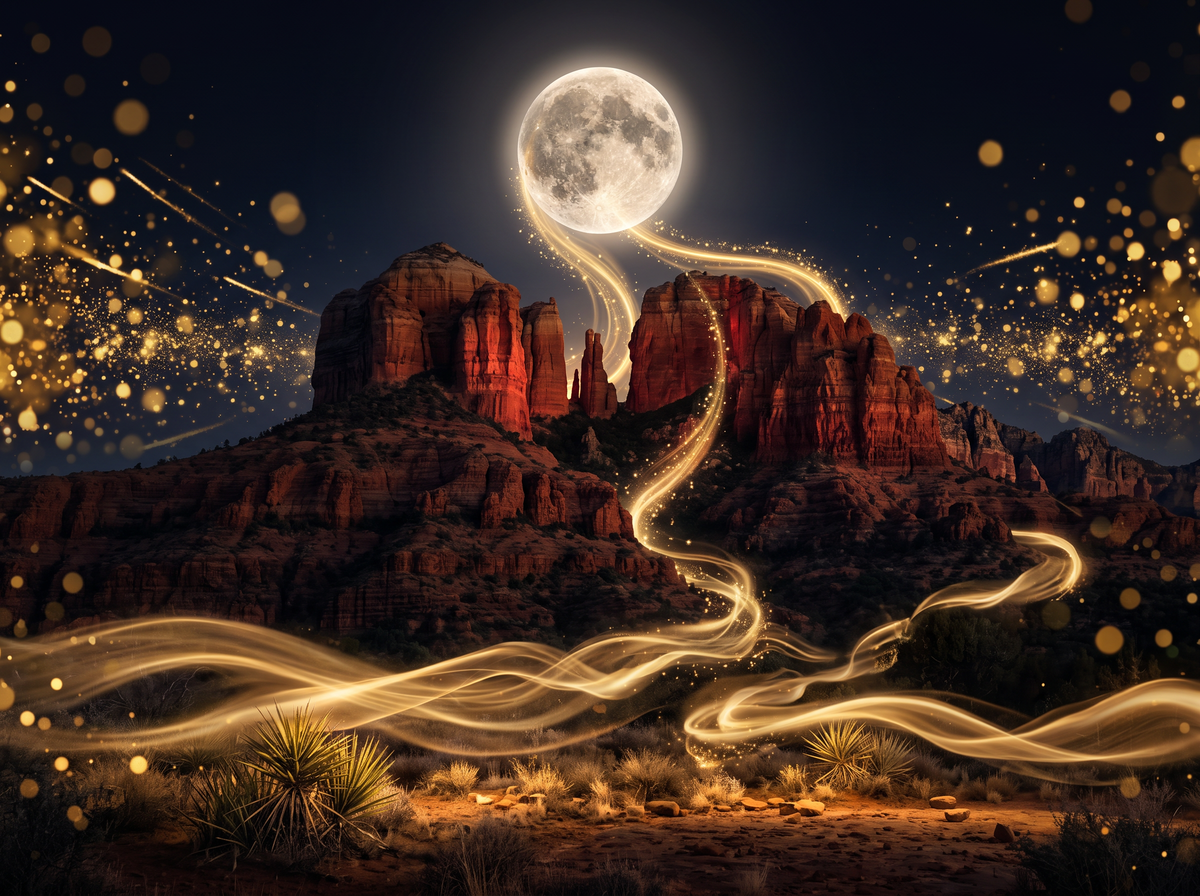
Portal 1 · Root · belonging
Sedona, Arizona
Red-rock country in the Arizona high desert, long held sacred by the Yavapai and Apache peoples. Stay on marked trails and honor the land that holds you.
The place
Sedona sits at the edge of the Colorado Plateau, where iron-rich sandstone has been carved by wind and water into the buttes and spires the world now knows: Cathedral Rock, Bell Rock, Boynton Canyon. The Sinagua people built cliff dwellings in these canyons between roughly 1100 and 1350 CE; the pictographs at Palatki and Honanki are still there. The Yavapai and the Tonto Apache hold this land as an origin place, and their descendants live here today as the Yavapai-Apache Nation.
The modern idea of Sedona's vortexes arrived in the 1980s, but people have come to this red rock to feel steadied for far longer than that.
The energy it carries
This is the root portal. The color of the rock is the color of iron and blood; the land itself feels planted. Sedona teaches belonging: that you are held before you have earned anything, that the ground does not ask you to be more than you are. Whatever else the path asks of you, it begins here, with your feet on the earth and the simple fact of being alive somewhere.
Practice from your room: Stand barefoot. Name the ground that holds you.
-
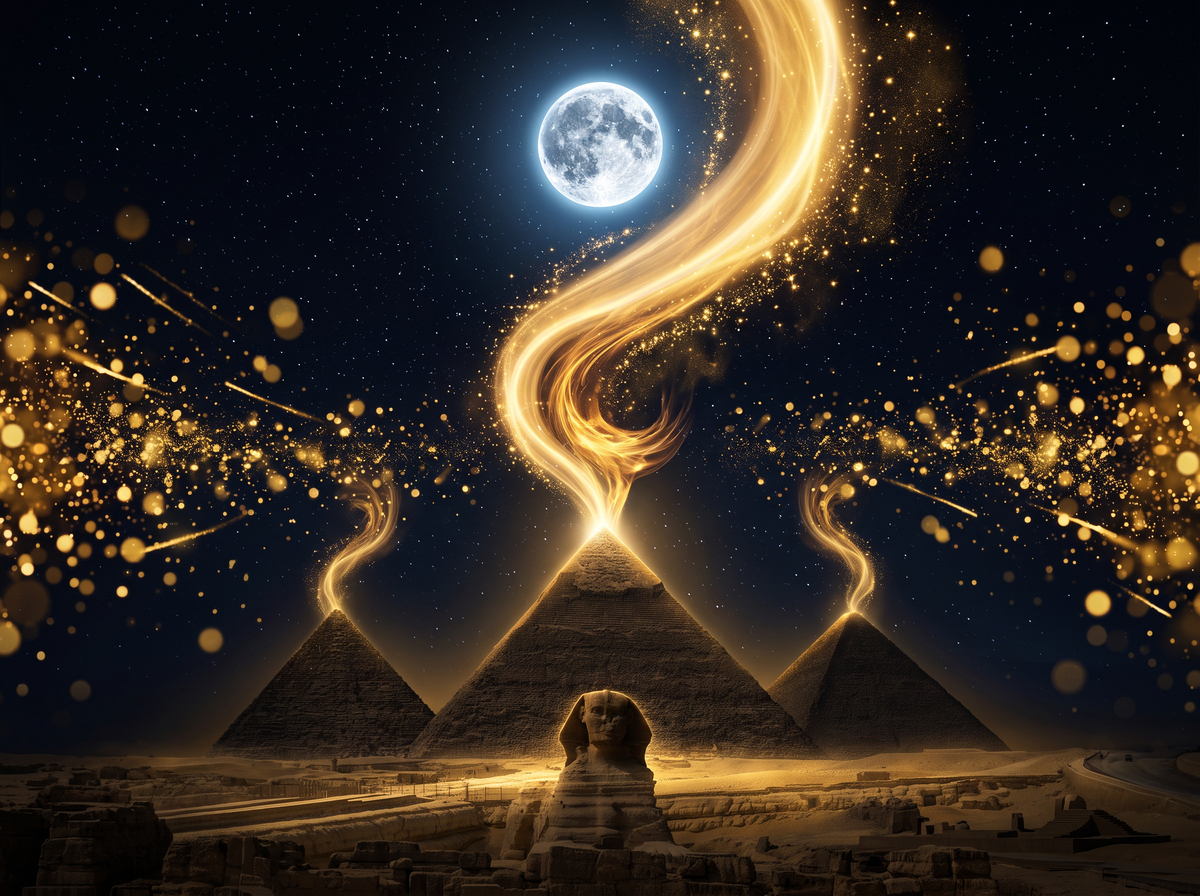
Portal 2 · Sacral · creation
Giza, Egypt
The pyramid field of Egypt's Old Kingdom, raised more than 4,500 years ago. A monument to what human hands and devotion can make.
The place
On the west bank of the Nile, where the sun sets and the Egyptians placed their dead, the pharaohs of the Fourth Dynasty raised the pyramids of Khufu, Khafre and Menkaure around 2560 to 2500 BCE. The Great Pyramid held the title of tallest structure on Earth for nearly four thousand years. Its sides are aligned to the cardinal directions with an error of a fraction of a degree, and the Sphinx, carved from the living bedrock, keeps watch toward the rising sun.
The builders were not slaves but organized crews of paid workers, housed and fed in a city beside the plateau. What stands here is the record of a civilization pouring its whole imagination into form.
The energy it carries
This is the sacral portal, the seat of creation. Giza asks a simple question: what will you make with the life you have been given? Not for applause, not to last four thousand years, but because making is what love does when it moves through a body. Every stone here was set by someone who would never see the finished work. Create anyway.
Practice from your room: Make one creative act and offer it without an audience.
-
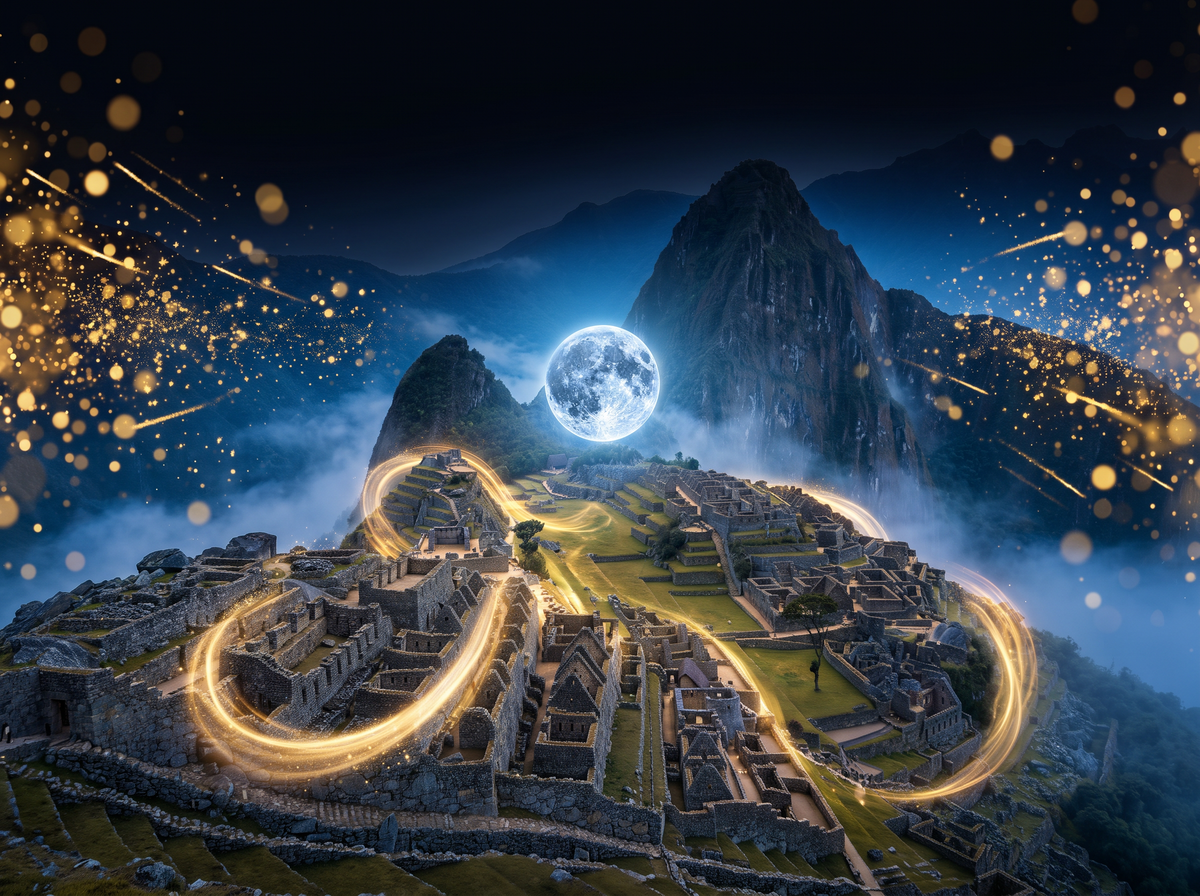
Portal 3 · Solar · will
Machu Picchu, Peru
The fifteenth-century Inca citadel high in the Andes, built stone by stone with patient, precise effort.
The place
Built around 1450 in the reign of the Inca emperor Pachacuti, Machu Picchu rides a ridge nearly 2,430 meters above the Urubamba River. Its terraces, temples and water channels were fitted from granite blocks cut so precisely that no mortar was needed and no blade fits between them. The Intihuatana stone, the Temple of the Sun and the Room of the Three Windows are aligned to the solstices.
Abandoned within a century, unknown to the Spanish, the city was kept by the mountain and the cloud forest until local families guided Hiram Bingham there in 1911. It has never stopped being a place of pilgrimage since.
The energy it carries
This is the solar portal, the seat of will. Machu Picchu was not wished into being; it was cut, carried and set, one honest effort at a time, in thin air. Its lesson is discipline aligned to the sun: do the work in front of you, do it fully, and let the shape of your life be built by what you actually complete. Will is not force. It is devotion with a schedule.
Practice from your room: Complete one honest effort before noon.
-
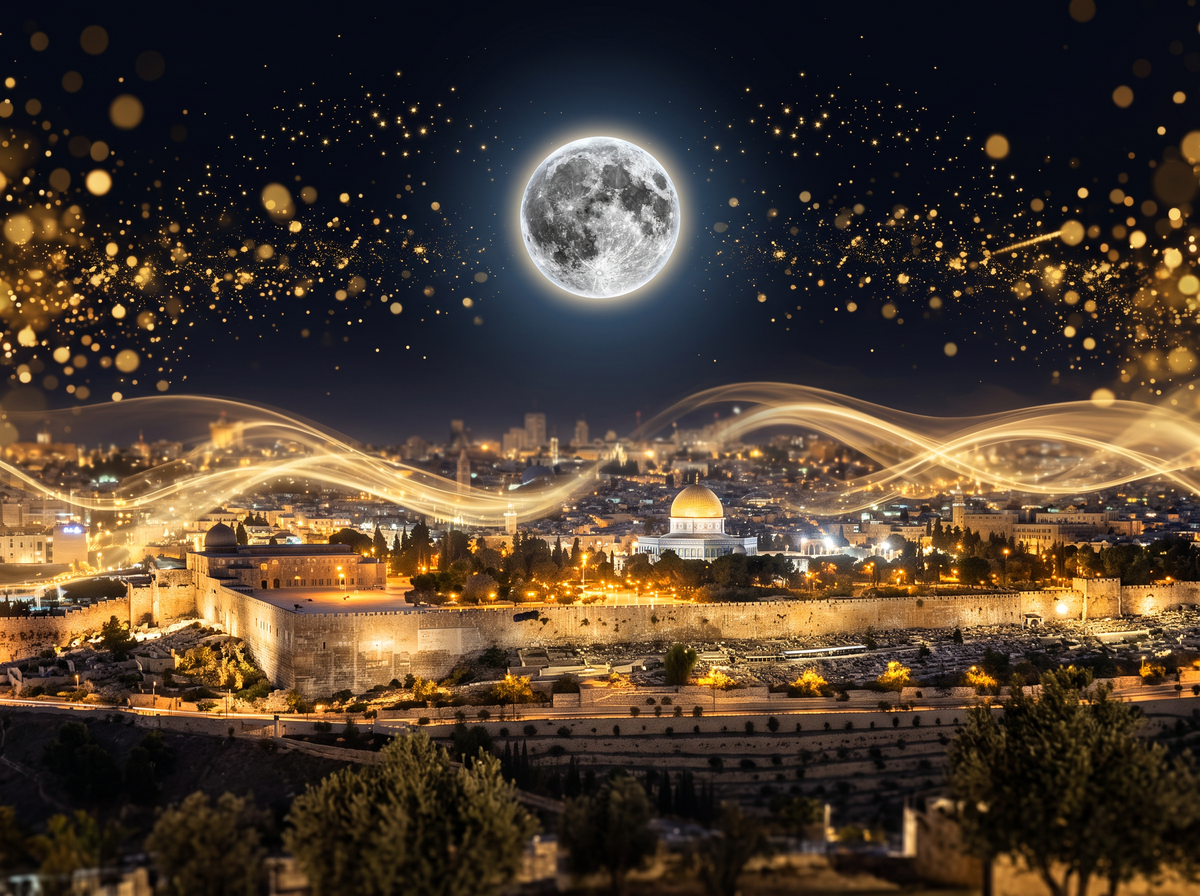
Portal 4 · Heart · devotion
Jerusalem, the Old City
Less than one square kilometer, holy to Jews, Christians and Muslims. Devotion lives here beside difference.
The place
Within walls rebuilt by Suleiman the Magnificent in the 1530s lie more than three thousand years of prayer. The Western Wall is a retaining wall of the Second Temple's platform, raised under Herod. The Church of the Holy Sepulchre was first consecrated in 335 CE on the site Christians hold as the place of the crucifixion and the empty tomb. The Dome of the Rock, completed in 691 CE, crowns the mount from which, in Muslim tradition, the Prophet ascended.
Four quarters, dozens of shrines, and a single square kilometer of stone worn smooth by every kind of pilgrim. Few places on Earth hold devotion so closely beside difference.
The energy it carries
This is the heart portal. The heart does not resolve contradiction; it holds it. Jerusalem asks you to keep loving in the presence of what you do not agree with, to let a blessing cross a boundary. Devotion here is not certainty. It is the willingness to kneel on the same stone as someone who prays differently, and to mean it.
Practice from your room: Speak a blessing for someone you resist.
-
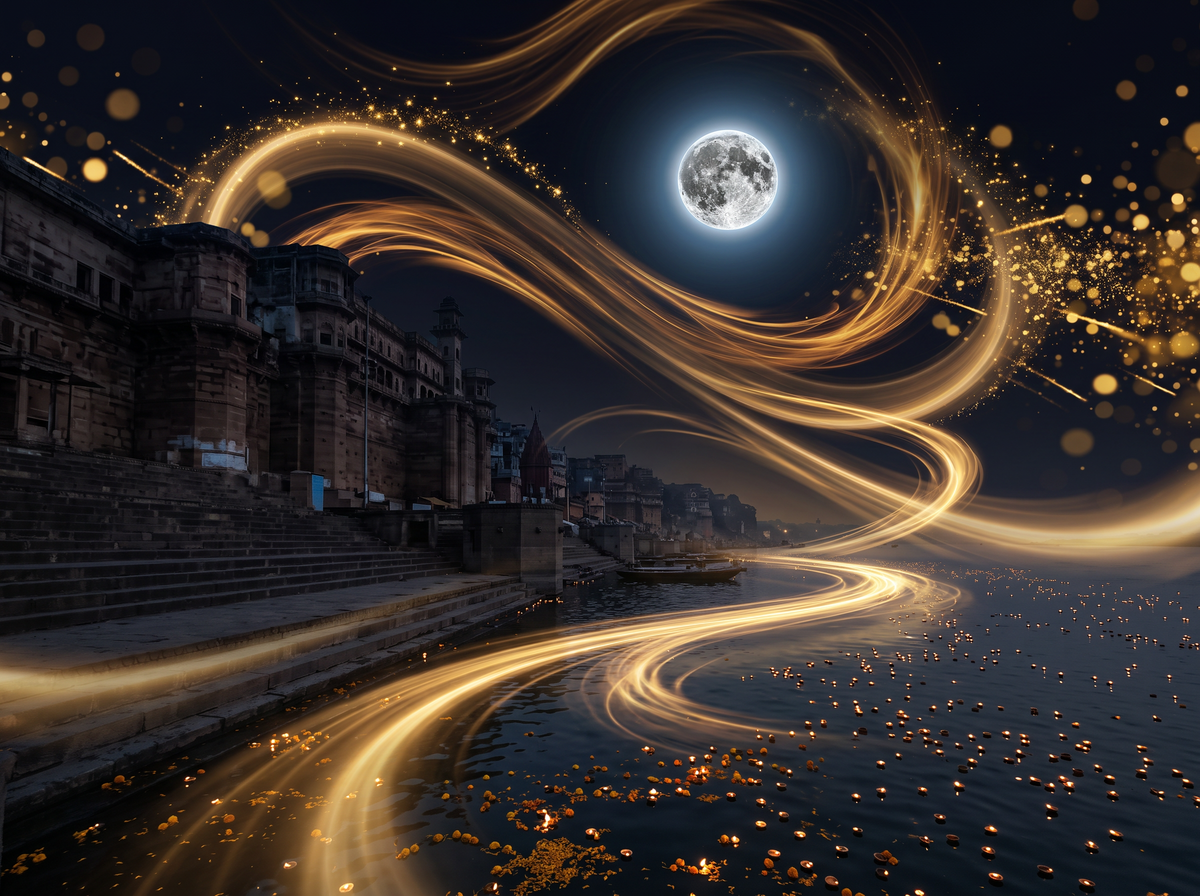
Portal 5 · Throat · truth
Varanasi, India
One of the oldest continuously inhabited cities on Earth, on the banks of the Ganges, where prayers are spoken aloud at dawn and dusk.
The place
Kashi, the City of Light, has stood on the crescent bend of the Ganges for roughly three thousand years. Eighty-odd ghats step down to the river; at Dashashwamedh the evening Ganga Aarti is offered with fire and bells, and at Manikarnika the cremation fires have not gone out in living memory. The Kashi Vishwanath temple is one of the twelve jyotirlingas of Shiva.
A few kilometers away at Sarnath, the Buddha gave his first teaching after enlightenment. Here truth is not private. It is spoken aloud at the water, in the open, with the whole of life and death in view.
The energy it carries
This is the throat portal, the seat of truth. Varanasi says the unsaid thing. Prayers are sung, not whispered; the dead are carried through the streets in daylight; the river receives everything that is spoken over it. The energy here is honesty without cruelty, the relief of a sentence finally said. What are you postponing? Say it, gently, and let the river take it downstream.
Practice from your room: Say the true thing you have been postponing.
-
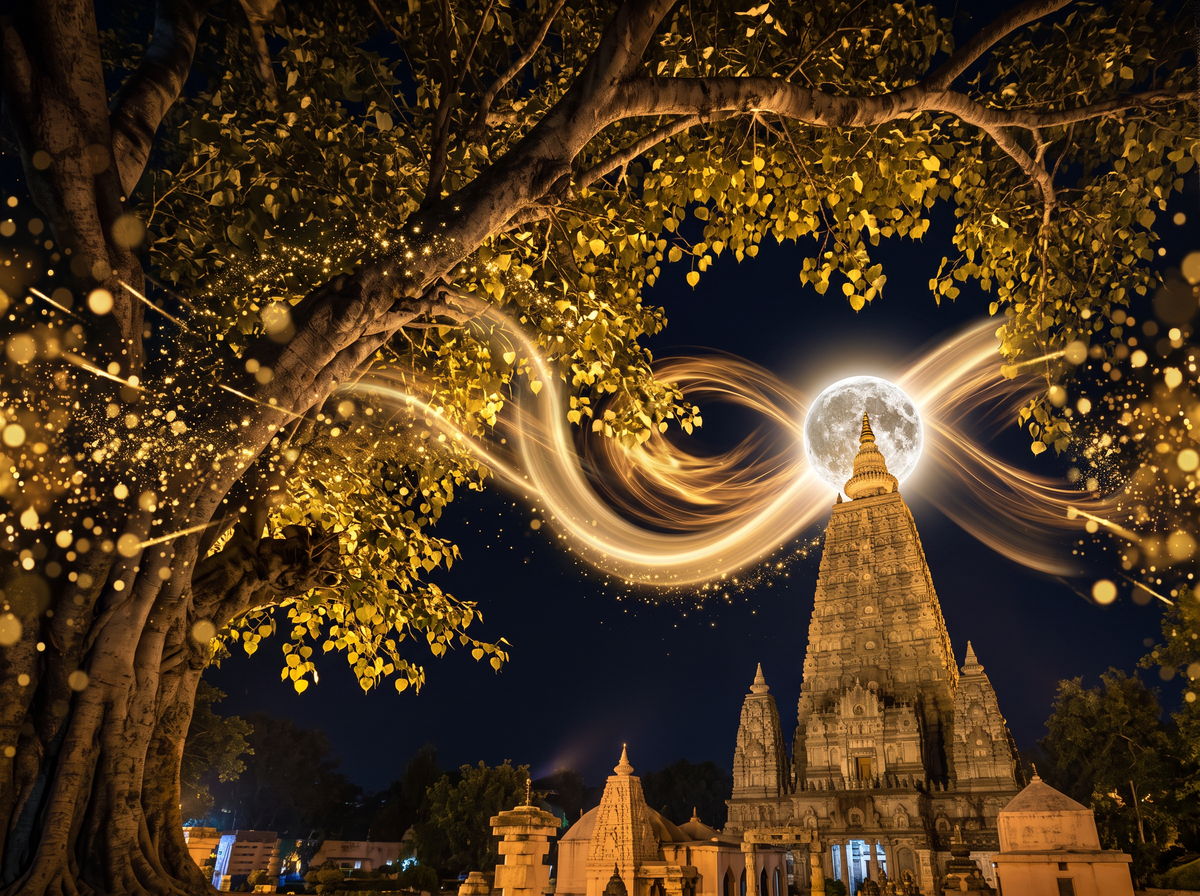
Portal 6 · Brow · seeing
Bodh Gaya, India
Where, in Buddhist tradition, Siddhartha Gautama awakened beneath the Bodhi tree.
The place
Around the fifth century BCE a young man sat down beneath a fig tree on the bank of the Niranjana River and resolved not to rise until he saw clearly. The Mahabodhi Temple that marks the spot was first raised by the emperor Ashoka in the third century BCE; the present brick tower dates from the fifth and sixth centuries CE and is a UNESCO World Heritage Site. The Bodhi tree that shades it today is a descendant of the original, grown from a cutting carried to Sri Lanka by Ashoka's daughter Sanghamitta and returned generations later.
Pilgrims from every Buddhist tradition circle the temple in silence, morning and night.
The energy it carries
This is the brow portal, the seat of seeing. Bodh Gaya is not about achieving anything. The awakening happened when striving stopped. Its energy is clarity without a project: the mind settling like silt in still water until what is simply true becomes visible. You do not have to fix yourself to see. You have to sit still long enough for the seeing to arrive.
Practice from your room: Sit still for eleven minutes. No improvement project.
-
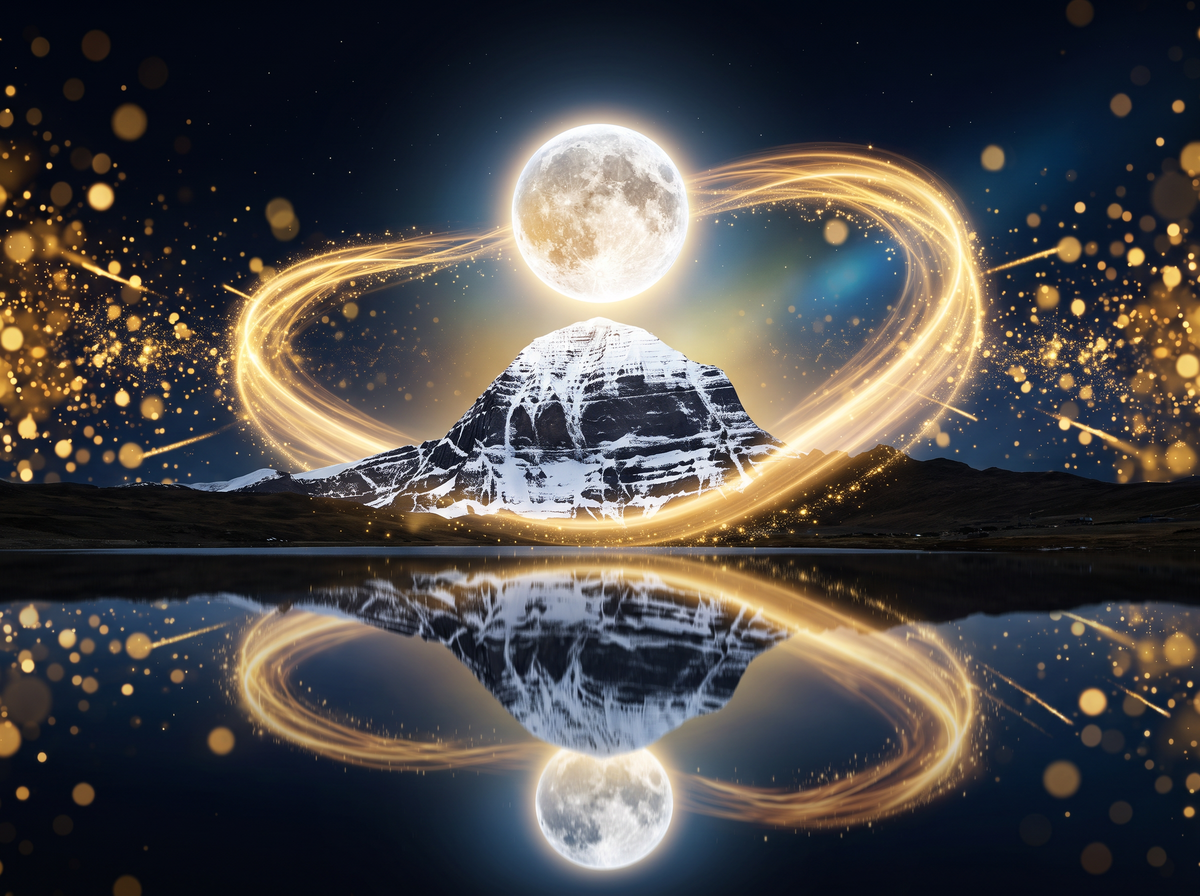
Portal 7 · Crown · union
Mount Kailash, Tibet
A peak sacred to Hindus, Buddhists, Jains and followers of Bön. It is not climbed; pilgrims walk around it.
The place
Kailash rises to 6,638 meters in the far west of Tibet, a near-symmetrical pyramid of dark rock and snow beside the turquoise lake Manasarovar. Four of Asia's great rivers, the Indus, the Sutlej, the Brahmaputra and the Karnali, rise within a few dozen kilometers of its base. To Hindus it is the abode of Shiva; to Buddhists the palace of Demchok; to Jains the place where their first Tirthankara found liberation; to followers of Bön it is the nine-storey sacred mountain at the heart of the world.
No one has ever stood on its summit. Pilgrims walk the 52-kilometer kora around it instead, some in a single day, some in full-body prostrations that take weeks.
The energy it carries
This is the crown portal, the seat of union. Kailash is the one summit that is never conquered, only circled, and that is the whole teaching. Union is not a peak you take; it is a center you keep returning around until the walker and the walked dissolve into one movement. Four rivers flow from one mountain. Four faiths bow to one peak. Sit as Love, with no object at all. Eternity is the Now.
Practice from your room: Sit as Love. No object. Eternity is the Now.
Many of these are living places of worship. Visit with humility, follow local guidance, and ask before photographing ceremonies.
Questions & answers
About the Seven Sites
What are the Seven Sacred Sites?
The Seven Sacred Sites are Blue Love’s inner map: Sedona, Giza, Machu Picchu, Jerusalem’s Old City, Varanasi, Bodh Gaya and Mount Kailash. Each is paired with an inner threshold, from belonging to union, and a practice you can do from home. Travel is never required.
Do I have to visit them?
No. The sites are mirrors, not destinations. Every practice on this page is designed to be done in your own room. If you do travel, go as a guest: these are living places of worship kept by real communities.
Is Blue Love a religion?
No. Blue Love is not a religion and asks no one to leave theirs. Our practices are universal: breath, stillness, gratitude, honest speech and service. When we teach about sacred places and traditions, we do it with respect for the living communities who keep them.